What Causes Termites? Termite Removal for Tallahassee Homeowners

If you are noticing damaged wood, mud tubes, or what look like white ants in wood, you may be asking the right question: what causes termites?
Termites are one of the most destructive structural pests in Florida. In Tallahassee and surrounding areas, our warm climate and high humidity create ideal conditions for termite activity year-round. Understanding what causes termites, what they are attracted to, and how they get inside your house is the first step toward protecting your home.
In this guide, we will explain:
- What termites are
- What causes termites to invade a home
- What are termites attracted to
- How do termites get inside your house
- Signs of termites and termite wood damage
- Whether termites are dangerous to humans
- How to kill termites in wood
- When to call a Tallahassee pest control company
This article is designed to give you real, practical answers so you can make informed decisions about protecting your home.
What Are Termites and What Causes Termites?
Termites are small, social insects that feed primarily on cellulose, which is found in wood and plant materials. In Florida, the most common species include subterranean termites and drywood termites.
So, what causes termites to infest a home?
Termites are not “caused” by dirtiness or neglect. Instead, infestations occur when the right environmental conditions meet available food sources.
Common factors that cause termites to invade include:
- Excess moisture around the foundation
- Wood-to-soil contact
- Poor drainage
- Leaking pipes
- Untreated wood structures
- Mulch placed against siding
- Cracks in foundations or slabs
In Tallahassee, high rainfall and humidity make moisture control especially important. When wood stays damp, it becomes highly attractive to termites.
What Are Termites Attracted To?
Understanding what are termites attracted to can help you prevent an infestation before it begins.
Termites are attracted to:
- Moist wood
- Structural lumber
- Wooden decks and porches
- Crawl spaces with humidity
- Mulch and landscaping timbers
- Firewood stacked near the home
- Cardboard and paper
Subterranean termites are particularly attracted to soil moisture. That is why foundation cracks and slab penetrations are common entry points.
Drywood termites, on the other hand, are attracted directly to dry structural wood and can infest attic framing, window trim, and furniture.
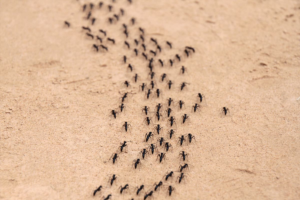
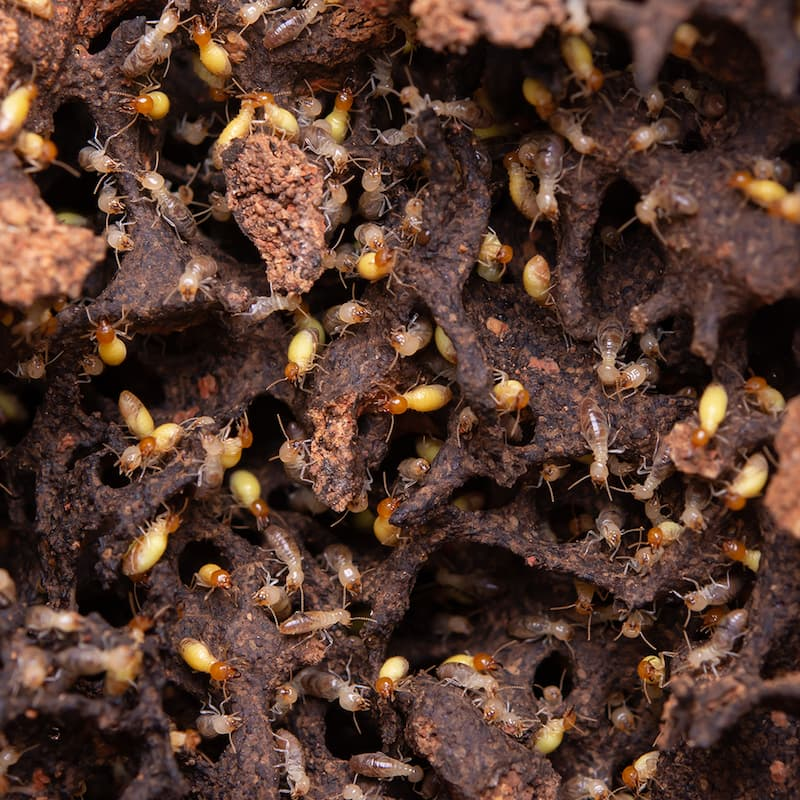
If you are seeing what looks like white ants in wood, you are likely looking at worker termites. Many homeowners in Tallahassee mistakenly refer to termites as “white ants,” but termites have straight antennae and thick waists, unlike ants.
How Do Termites Get Inside Your House?
One of the most important questions homeowners ask is: how do termites get inside your house?
Subterranean termites build mud tubes from the soil to your home’s wooden structures. These tubes protect them from dehydration and predators.
Common entry points include:
- Cracks in the slab
- Gaps around plumbing lines
- Foundation expansion joints
- Wooden siding touching soil
- Unsealed utility penetrations
Drywood termites can enter through:
- Small cracks in siding
- Attic vents
- Rooflines
- Exposed wood surfaces
Termite swarmers, which are reproductive termites with wings, often emerge in spring. If you see flying termites inside your home, it may indicate an active colony nearby.
Signs of Termites and Termite Wood Damage
Early detection is critical when it comes to signs of termites and preventing severe termite wood damage.
Common signs include:
- Mud tubes along foundation walls
- Hollow-sounding wood
- Buckling or blistering paint
- Discarded wings near windows
- Small piles of frass (termite droppings)
- Doors and windows that stick
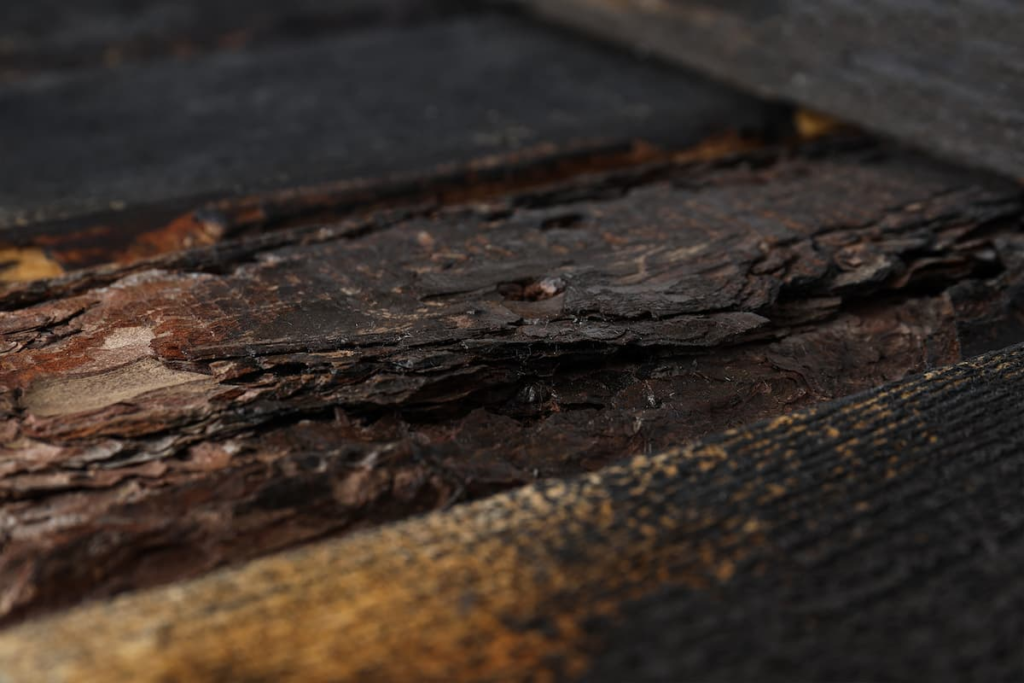
Termite wood damage often appears as galleries inside beams and studs. Subterranean termites eat wood from the inside out, leaving a thin outer layer intact. Drywood termites create smooth, hollowed-out tunnels within wood.
The longer an infestation goes untreated, the more extensive the structural damage can become.
Are Termites Dangerous to Humans?
Homeowners frequently ask: are termites dangerous to humans?
The good news is that termites are not known to spread disease to humans.
However, they are dangerous in other ways.
- They can compromise structural integrity
- They cause costly repairs
- Severe infestations can weaken load-bearing beams
While termites themselves are not aggressive, some people also ask, do termites bite humans?
Termites rarely bite people. Worker termites do not bite humans at all. Soldier termites have mandibles designed for defense, but bites are extremely uncommon and not medically significant.
The real danger lies in structural damage, not physical harm.
Do Termites Bite Humans?
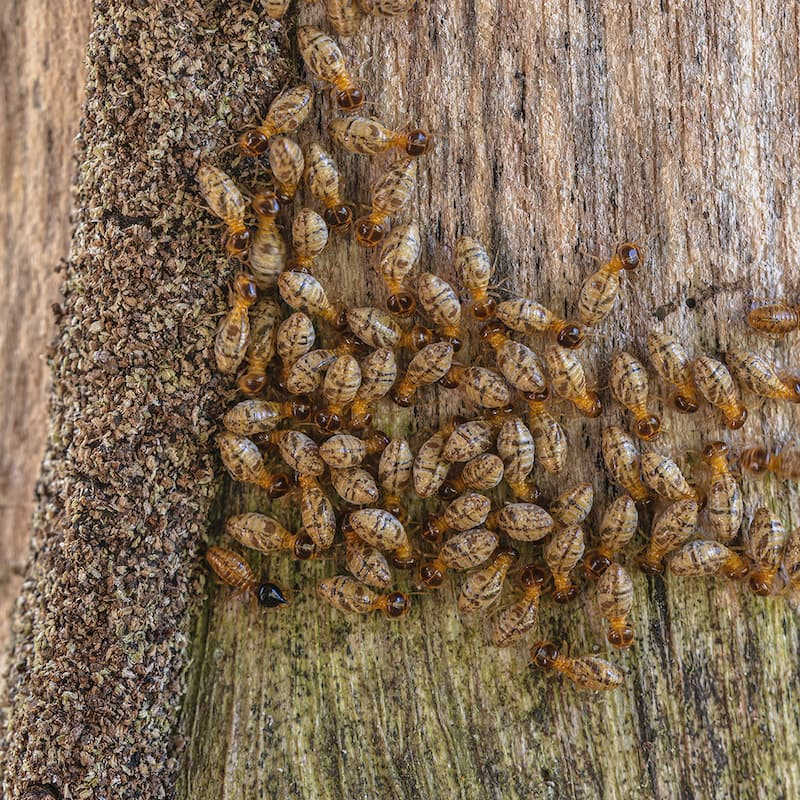
To answer clearly: do termites bite humans? It is highly unlikely.
Termites are focused on feeding on wood and cellulose. They are not interested in human skin. Even in severe infestations, bites are extremely rare and generally harmless.
If you are noticing bites in your home, another pest such as bed bugs or fleas is more likely responsible.
How to Kill Termites in Wood
If you are searching for how to kill termites in wood, it is important to understand that DIY treatments often only address surface issues.
Options include:
- Borate wood treatments
- Termite foam injections
- Spot treatments
- Soil-applied termiticides
- Baiting systems
However, simply spraying visible areas does not eliminate the colony. Subterranean termite colonies can contain hundreds of thousands of individuals underground.
Professional termite treatment methods typically involve:
- Trenching and treating soil around the foundation
- Installing baiting systems
- Applying non-repellent termiticides
- Conducting full structural inspections
Without addressing the colony, termites will continue causing termite wood damage.
Why Termites Are Common in Tallahassee
Tallahassee’s climate makes it a high-risk area for termite activity.
Factors include:
- Warm temperatures most of the year
- Frequent rainfall
- High humidity
- Dense tree coverage
- Sandy soil conditions
Homes with crawl spaces and older construction are particularly vulnerable.
Even new construction homes are not immune if proper soil treatment and moisture control are not maintained.
When to Call a Tallahassee Pest Control Company
If you suspect termite activity, early intervention is key.
A licensed Tallahassee pest control company can:
- Identify the termite species
- Locate hidden colonies
- Assess structural risk
- Recommend customized treatment plans
- Provide long-term monitoring
At Capital City Pest Control, our team specializes in termite inspections and treatments designed specifically for North Florida homes. We understand the unique environmental pressures in Tallahassee and tailor our approach accordingly.
Why Choose Capital City Pest Control for Termites?
Choosing the right provider for pest control services matters when dealing with termites.
Capital City Pest Control offers:
- Comprehensive termite inspections
- Advanced treatment options
- Preventative monitoring programs
- Local expertise
- Professional, licensed technicians
We prioritize education, transparency, and long-term protection for homeowners throughout Tallahassee and surrounding communities.
If you are asking what causes termites, chances are you may already be seeing warning signs. The sooner you act, the less damage your home will sustain.
Final Thoughts: What Causes Termites and How to Protect Your Home
To summarize, what causes termites is a combination of:
- Moisture
- Accessible wood
- Structural vulnerabilities
- Environmental conditions
Termites are not attracted to dirty homes. They are attracted to food and moisture. By controlling humidity, sealing cracks, and scheduling regular inspections, you significantly reduce your risk.
If you suspect termite activity or simply want peace of mind, schedule an inspection with Capital City Pest Control today. As a trusted Tallahassee pest control company, we are here to protect your home from termite damage before it becomes a costly problem.
What Causes Termites? Termite Removal for Tallahassee Homeowners
If you are noticing damaged wood, mud tubes, or what look like white ants in wood, you may be asking the right question: what causes termites?
Termites are one of the most destructive structural pests in Florida. In Tallahassee and surrounding areas, our warm climate and high humidity create ideal conditions for termite activity year-round. Understanding what causes termites, what they are attracted to, and how they get inside your house is the first step toward protecting your home.
In this guide, we will explain:
- What termites are
- What causes termites to invade a home
- What are termites attracted to
- How do termites get inside your house
- Signs of termites and termite wood damage
- Whether termites are dangerous to humans
- How to kill termites in wood
- When to call a Tallahassee pest control company
This article is designed to give you real, practical answers so you can make informed decisions about protecting your home.
What Are Termites and What Causes Termites?
Termites are small, social insects that feed primarily on cellulose, which is found in wood and plant materials. In Florida, the most common species include subterranean termites and drywood termites.
So, what causes termites to infest a home?
Termites are not “caused” by dirtiness or neglect. Instead, infestations occur when the right environmental conditions meet available food sources.
Common factors that cause termites to invade include:
- Excess moisture around the foundation
- Wood-to-soil contact
- Poor drainage
- Leaking pipes
- Untreated wood structures
- Mulch placed against siding
- Cracks in foundations or slabs
In Tallahassee, high rainfall and humidity make moisture control especially important. When wood stays damp, it becomes highly attractive to termites.
What Are Termites Attracted To?
Understanding what are termites attracted to can help you prevent an infestation before it begins.
Termites are attracted to:
- Moist wood
- Structural lumber
- Wooden decks and porches
- Crawl spaces with humidity
- Mulch and landscaping timbers
- Firewood stacked near the home
- Cardboard and paper
Subterranean termites are particularly attracted to soil moisture. That is why foundation cracks and slab penetrations are common entry points.
Drywood termites, on the other hand, are attracted directly to dry structural wood and can infest attic framing, window trim, and furniture.
If you are seeing what looks like white ants in wood, you are likely looking at worker termites. Many homeowners in Tallahassee mistakenly refer to termites as “white ants,” but termites have straight antennae and thick waists, unlike ants.
How Do Termites Get Inside Your House?
One of the most important questions homeowners ask is: how do termites get inside your house?
Subterranean termites build mud tubes from the soil to your home’s wooden structures. These tubes protect them from dehydration and predators.
Common entry points include:
- Cracks in the slab
- Gaps around plumbing lines
- Foundation expansion joints
- Wooden siding touching soil
- Unsealed utility penetrations
Drywood termites can enter through:
- Small cracks in siding
- Attic vents
- Rooflines
- Exposed wood surfaces
Termite swarmers, which are reproductive termites with wings, often emerge in spring. If you see flying termites inside your home, it may indicate an active colony nearby.
Signs of Termites and Termite Wood Damage
Early detection is critical when it comes to signs of termites and preventing severe termite wood damage.
Common signs include:
- Mud tubes along foundation walls
- Hollow-sounding wood
- Buckling or blistering paint
- Discarded wings near windows
- Small piles of frass (termite droppings)
- Doors and windows that stick
Termite wood damage often appears as galleries inside beams and studs. Subterranean termites eat wood from the inside out, leaving a thin outer layer intact. Drywood termites create smooth, hollowed-out tunnels within wood.
The longer an infestation goes untreated, the more extensive the structural damage can become.

Are Termites Dangerous to Humans?
Homeowners frequently ask: are termites dangerous to humans?
The good news is that termites are not known to spread disease to humans.
However, they are dangerous in other ways.
- They can compromise structural integrity
- They cause costly repairs
- Severe infestations can weaken load-bearing beams
While termites themselves are not aggressive, some people also ask, do termites bite humans?
Termites rarely bite people. Worker termites do not bite humans at all. Soldier termites have mandibles designed for defense, but bites are extremely uncommon and not medically significant.
The real danger lies in structural damage, not physical harm.
Do Termites Bite Humans?
To answer clearly: do termites bite humans? It is highly unlikely.
Termites are focused on feeding on wood and cellulose. They are not interested in human skin. Even in severe infestations, bites are extremely rare and generally harmless.
If you are noticing bites in your home, another pest such as bed bugs or fleas is more likely responsible.
How to Kill Termites in Wood
If you are searching for how to kill termites in wood, it is important to understand that DIY treatments often only address surface issues.
Options include:
- Borate wood treatments
- Termite foam injections
- Spot treatments
- Soil-applied termiticides
- Baiting systems
However, simply spraying visible areas does not eliminate the colony. Subterranean termite colonies can contain hundreds of thousands of individuals underground.
Professional termite treatment methods typically involve:
- Trenching and treating soil around the foundation
- Installing baiting systems
- Applying non-repellent termiticides
- Conducting full structural inspections
Without addressing the colony, termites will continue causing termite wood damage.
Why Termites Are Common in Tallahassee
Tallahassee’s climate makes it a high-risk area for termite activity.
Factors include:
- Warm temperatures most of the year
- Frequent rainfall
- High humidity
- Dense tree coverage
- Sandy soil conditions
Homes with crawl spaces and older construction are particularly vulnerable.
Even new construction homes are not immune if proper soil treatment and moisture control are not maintained.
When to Call a Tallahassee Pest Control Company
If you suspect termite activity, early intervention is key.
A licensed Tallahassee pest control company can:
- Identify the termite species
- Locate hidden colonies
- Assess structural risk
- Recommend customized treatment plans
- Provide long-term monitoring
At Capital City Pest Control, our team specializes in termite inspections and treatments designed specifically for North Florida homes. We understand the unique environmental pressures in Tallahassee and tailor our approach accordingly.
Why Choose Capital City Pest Control for Termites?
Choosing the right provider for pest control services matters when dealing with termites.
Capital City Pest Control offers:
- Comprehensive termite inspections
- Advanced treatment options
- Preventative monitoring programs
- Local expertise
- Professional, licensed technicians
We prioritize education, transparency, and long-term protection for homeowners throughout Tallahassee and surrounding communities.
If you are asking what causes termites, chances are you may already be seeing warning signs. The sooner you act, the less damage your home will sustain.
Final Thoughts: What Causes Termites and How to Protect Your Home
To summarize, what causes termites is a combination of:
- Moisture
- Accessible wood
- Structural vulnerabilities
- Environmental conditions
Termites are not attracted to dirty homes. They are attracted to food and moisture. By controlling humidity, sealing cracks, and scheduling regular inspections, you significantly reduce your risk.
If you suspect termite activity or simply want peace of mind, schedule an inspection with Capital City Pest Control today. As a trusted Tallahassee pest control company, we are here to protect your home from termite damage before it becomes a costly problem.
Frequently Asked Questions
Termites do not appear suddenly. They may have been present underground for months before visible signs emerge. Swarming season often reveals hidden infestations.
Termites are not dangerous in terms of spreading disease, but they are dangerous to structures and can cause significant property damage.
They enter through foundation cracks, plumbing gaps, wood-to-soil contact, and other structural openings.
Professional treatment that targets the colony, such as soil treatment or baiting systems, is the most effective long-term solution.
Yes. Seeing even one termite, especially indoors, can indicate a larger colony nearby. A professional inspection is recommended.