Tiny Black Ants in Your House? Here’s How to Get Rid of Them
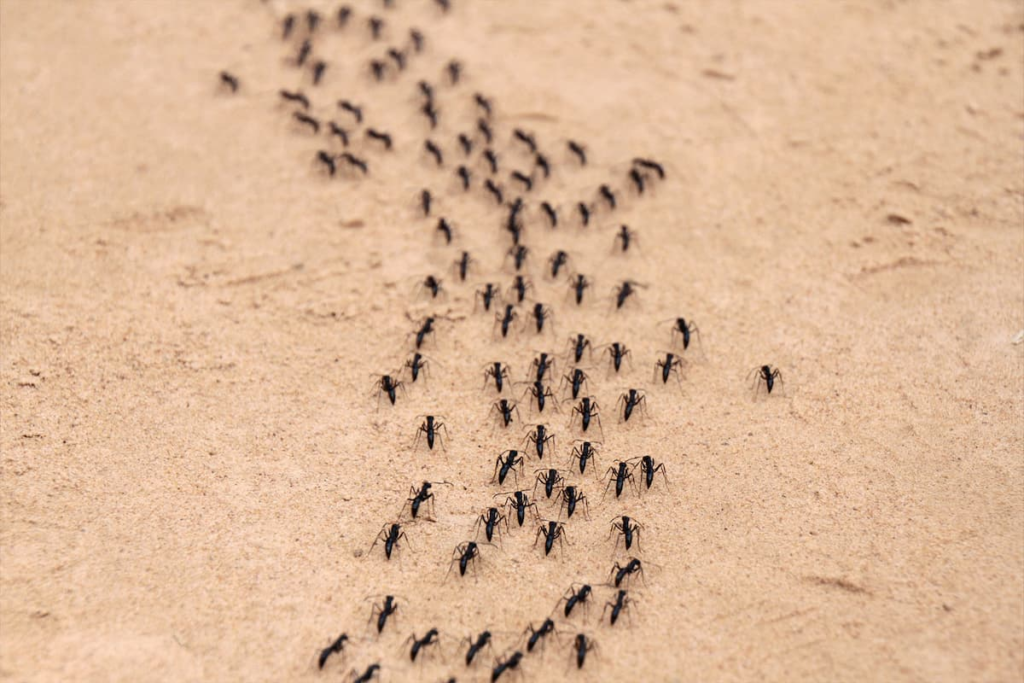
You walk into your kitchen early in the morning and notice a thin black line moving along your countertop. By lunchtime, there are dozens. By tomorrow, it feels like hundreds.
If you are asking how do you get rid of tiny ants, especially small black ants in kitchen areas, you need more than a surface spray. You need to understand why they are there and how colonies function.
In Tallahassee, tiny ant infestations are extremely common due to warm temperatures, high humidity, and dense vegetation around homes. This article breaks down exactly what attracts ants, what works, what does not, and when to call a professional.
Why Tiny Ants Suddenly Appear in Tallahassee Homes
Ant infestations do not happen randomly. They happen because a colony has identified your home as a reliable resource.
Here is what typically triggers indoor activity:
- Moisture around sinks or dishwashers
- Sugar residue or crumbs
- Pet food bowls
- Garbage cans without tight lids
- Leaking plumbing inside walls
- Exterior mulch beds touching the foundation
Understanding what attracts ants is the first step in solving the issue.
Ant colonies send out scouts constantly. The moment one finds food or water, it leaves behind a chemical trail. That trail signals the rest of the colony to follow.
That is why you see sudden “invasions.” It is coordinated foraging behavior.
Small Black Ants in Kitchen: What Species Are You Seeing?

When homeowners mention small black ants in kitchen, they are often dealing with one of these species common in North Florida:
- Ghost ants
- Argentine ants
- Odorous house ants
- Pavement ants
Each species behaves slightly differently. Some nest outdoors and forage indoors. Others build satellite colonies inside wall voids.
This matters because treatment strategy depends on the species. Spraying blindly without identification can make the problem worse.
What Do Ants Hate and What Smell Do Ants Hate?
You have probably heard that certain scents repel ants.
So let’s answer it clearly.
What do ants hate?
Ants rely heavily on pheromone trails. Anything that disrupts those trails can temporarily confuse them.
What smell do ants hate?
Common smells ants hate include:
- Peppermint
- Vinegar
- Citrus oils
- Cinnamon
- Clove
These strong scents interfere with scent communication.
However, here is the key: repellents disrupt trails but do not eliminate colonies.
If you repel ants from one area, they may reroute through another wall or room.
Essential Oils to Kill Ants: Effective or Overhyped?
There is a growing trend of using essential oils to kill ants.
Peppermint oil spray is especially popular. While concentrated essential oils may kill ants on contact, they typically act more as deterrents.
Pros:
- Natural odor
- Minimal chemical exposure
- Can break scent trails
Cons:
- Does not eliminate the queen
- Does not penetrate hidden nests
- May cause colony to fragment
Fragmentation can actually multiply the problem by creating multiple nests.
Essential oils are best used as temporary management, not full extermination.
Will Salt Kill Ants? What About Does Lysol Kill Ants?
These are two of the most searched DIY questions.
Will salt kill ants?
Salt can dehydrate ants if directly applied, but it is not a viable long-term solution. It does not reach the nest or eliminate the colony.
Does Lysol kill ants?
Yes, Lysol and similar disinfectant sprays will kill ants on contact. However, they only eliminate visible workers. The colony remains active.
Killing surface ants without targeting the colony is like trimming weeds without removing the roots.
The Real Answer to “How Do You Get Rid of Tiny Ants?”

If you want to know how do you get rid of tiny ants permanently, the strategy must focus on colony elimination.
Here is what actually works.
Step 1: Do Not Spray the Trail Immediately
Spraying visible ants with repellent products can reduce bait effectiveness later.
Instead, observe:
- Where are they entering?
- What food source are they targeting?
- Are they coming from inside walls or outside?
Step 2: Remove Attractants
Because what attracts ants is usually food or moisture, eliminate:
- Countertop spills
- Sticky cabinet shelves
- Open food containers
- Pet food left overnight
- Leaky pipes
Deep clean with degreasing products.
Step 3: Use Professional-Grade Baits
Baiting is the most effective solution.
Ant workers collect bait and carry it back to the colony. Once shared, the toxin spreads and eliminates the queen.
This process can take several days, but it addresses the root cause.
Step 4: Exterior Perimeter Treatment
In Tallahassee, many ant colonies originate outdoors in mulch beds or soil near foundations.
Exterior treatment creates a protective barrier and reduces reinfestation.
Why Tiny Ant Problems Are Worse in Tallahassee
Our local environment plays a major role.
- Warm weather extends ant breeding cycles
- High humidity supports nesting
- Sandy soils allow easy tunneling
- Dense landscaping creates ideal habitat
Even newly built homes are vulnerable if mulch is placed against siding or irrigation keeps soil constantly damp.
Year-round pest pressure means proactive protection is important.
When DIY Methods Fail
If you have tried:
- Vinegar
- Essential oils
- Salt
- Store-bought sprays
- Disinfectant cleaners
and ants keep returning, it is time for professional intervention.
Recurring infestations usually indicate:
- Hidden interior nesting
- Multiple satellite colonies
- Structural entry points
- Species misidentification
This is where experienced pest control in Tallahassee becomes critical.
How Capital City Pest Control Solves Tiny Ant Problems
At Capital City Pest Control, we approach ant infestations differently than typical over-the-counter solutions.
Our process includes:
- Thorough interior and exterior inspection
- Species identification
- Targeted bait application
- Exterior barrier treatment
- Entry point assessment
- Long-term prevention planning
We do not simply spray surfaces. We focus on eliminating the colony and preventing future invasions.
As a trusted provider of pest control in Tallahassee, we understand the behavior patterns of ants specific to North Florida.
Preventing Future Ant Infestations
Once ants are eliminated, prevention becomes key.
To reduce risk:
- Store food in airtight containers
- Clean counters daily
- Seal cracks around windows and doors
- Keep mulch at least 12 inches from foundation
- Trim vegetation touching exterior walls
- Address moisture issues immediately
Small black ants in kitchen spaces are often a symptom of a larger outdoor nesting issue.
Regular inspections help catch problems early.
Final Takeaway: How Do You Get Rid of Tiny Ants for Good?
Let’s simplify the answer.
- Smells ants hate may repel temporarily.
- Essential oils to kill ants can help short term.
- Will salt kill ants? Possibly on contact, but not colonies.
- Does Lysol kill ants? Yes, but only visible workers.
- The real solution is colony elimination.
If tiny ants are returning despite your efforts, professional evaluation is the smartest next step.
Capital City Pest Control provides reliable, effective pest control in Tallahassee designed to eliminate ants at the source and protect your home long term.
Tiny Black Ants in Your House? Here’s How to Get Rid of Them
You walk into your kitchen early in the morning and notice a thin black line moving along your countertop. By lunchtime, there are dozens. By tomorrow, it feels like hundreds.
If you are asking how do you get rid of tiny ants, especially small black ants in kitchen areas, you need more than a surface spray. You need to understand why they are there and how colonies function.
In Tallahassee, tiny ant infestations are extremely common due to warm temperatures, high humidity, and dense vegetation around homes. This article breaks down exactly what attracts ants, what works, what does not, and when to call a professional.
Why Tiny Ants Suddenly Appear in Tallahassee Homes
Ant infestations do not happen randomly. They happen because a colony has identified your home as a reliable resource.
Here is what typically triggers indoor activity:
- Moisture around sinks or dishwashers
- Sugar residue or crumbs
- Pet food bowls
- Garbage cans without tight lids
- Leaking plumbing inside walls
- Exterior mulch beds touching the foundation
Understanding what attracts ants is the first step in solving the issue.
Ant colonies send out scouts constantly. The moment one finds food or water, it leaves behind a chemical trail. That trail signals the rest of the colony to follow.
That is why you see sudden “invasions.” It is coordinated foraging behavior.
Small Black Ants in Kitchen: What Species Are You Seeing?
When homeowners mention small black ants in kitchen, they are often dealing with one of these species common in North Florida:
- Ghost ants
- Argentine ants
- Odorous house ants
- Pavement ants
Each species behaves slightly differently. Some nest outdoors and forage indoors. Others build satellite colonies inside wall voids.
This matters because treatment strategy depends on the species. Spraying blindly without identification can make the problem worse.
What Do Ants Hate and What Smell Do Ants Hate?
You have probably heard that certain scents repel ants.
So let’s answer it clearly.
What do ants hate?
Ants rely heavily on pheromone trails. Anything that disrupts those trails can temporarily confuse them.
What smell do ants hate?
Common smells ants hate include:
- Peppermint
- Vinegar
- Citrus oils
- Cinnamon
- Clove
These strong scents interfere with scent communication.
However, here is the key: repellents disrupt trails but do not eliminate colonies.
If you repel ants from one area, they may reroute through another wall or room.
Essential Oils to Kill Ants: Effective or Overhyped?
There is a growing trend of using essential oils to kill ants.
Peppermint oil spray is especially popular. While concentrated essential oils may kill ants on contact, they typically act more as deterrents.
Pros:
- Natural odor
- Minimal chemical exposure
- Can break scent trails
Cons:
- Does not eliminate the queen
- Does not penetrate hidden nests
- May cause colony to fragment
Fragmentation can actually multiply the problem by creating multiple nests.
Essential oils are best used as temporary management, not full extermination.
Will Salt Kill Ants? What About Does Lysol Kill Ants?
These are two of the most searched DIY questions.
Will salt kill ants?
Salt can dehydrate ants if directly applied, but it is not a viable long-term solution. It does not reach the nest or eliminate the colony.
Does Lysol kill ants?
Yes, Lysol and similar disinfectant sprays will kill ants on contact. However, they only eliminate visible workers. The colony remains active.
Killing surface ants without targeting the colony is like trimming weeds without removing the roots.
The Real Answer to “How Do You Get Rid of Tiny Ants?”
If you want to know how do you get rid of tiny ants permanently, the strategy must focus on colony elimination.
Here is what actually works.
Step 1: Do Not Spray the Trail Immediately
Spraying visible ants with repellent products can reduce bait effectiveness later.
Instead, observe:
- Where are they entering?
- What food source are they targeting?
- Are they coming from inside walls or outside?
Step 2: Remove Attractants
Because what attracts ants is usually food or moisture, eliminate:
- Countertop spills
- Sticky cabinet shelves
- Open food containers
- Pet food left overnight
- Leaky pipes
Deep clean with degreasing products.
Step 3: Use Professional-Grade Baits
Baiting is the most effective solution.
Ant workers collect bait and carry it back to the colony. Once shared, the toxin spreads and eliminates the queen.
This process can take several days, but it addresses the root cause.
Step 4: Exterior Perimeter Treatment
In Tallahassee, many ant colonies originate outdoors in mulch beds or soil near foundations.
Exterior treatment creates a protective barrier and reduces reinfestation.
Why Tiny Ant Problems Are Worse in Tallahassee
Our local environment plays a major role.
- Warm weather extends ant breeding cycles
- High humidity supports nesting
- Sandy soils allow easy tunneling
- Dense landscaping creates ideal habitat
Even newly built homes are vulnerable if mulch is placed against siding or irrigation keeps soil constantly damp.
Year-round pest pressure means proactive protection is important.
When DIY Methods Fail
If you have tried:
- Vinegar
- Essential oils
- Salt
- Store-bought sprays
- Disinfectant cleaners
and ants keep returning, it is time for professional intervention.
Recurring infestations usually indicate:
- Hidden interior nesting
- Multiple satellite colonies
- Structural entry points
- Species misidentification
This is where experienced pest control in Tallahassee becomes critical.
How Capital City Pest Control Solves Tiny Ant Problems
At Capital City Pest Control, we approach ant infestations differently than typical over-the-counter solutions.
Our process includes:
- Thorough interior and exterior inspection
- Species identification
- Targeted bait application
- Exterior barrier treatment
- Entry point assessment
- Long-term prevention planning
We do not simply spray surfaces. We focus on eliminating the colony and preventing future invasions.
As a trusted provider of pest control in Tallahassee, we understand the behavior patterns of ants specific to North Florida.
Preventing Future Ant Infestations
Once ants are eliminated, prevention becomes key.
To reduce risk:
- Store food in airtight containers
- Clean counters daily
- Seal cracks around windows and doors
- Keep mulch at least 12 inches from foundation
- Trim vegetation touching exterior walls
- Address moisture issues immediately
Small black ants in kitchen spaces are often a symptom of a larger outdoor nesting issue.
Regular inspections help catch problems early.
Final Takeaway: How Do You Get Rid of Tiny Ants for Good?
Let’s simplify the answer.
- Smells ants hate may repel temporarily.
- Essential oils to kill ants can help short term.
- Will salt kill ants? Possibly on contact, but not colonies.
- Does Lysol kill ants? Yes, but only visible workers.
- The real solution is colony elimination.
If tiny ants are returning despite your efforts, professional evaluation is the smartest next step.
Capital City Pest Control provides reliable, effective pest control in Tallahassee designed to eliminate ants at the source and protect your home long term.
Frequently Asked Questions
A scout likely found food or moisture and laid down a pheromone trail that triggered coordinated foraging.
Sugary spills, grease residue, pet food, and moisture from plumbing leaks are common attractants.
Peppermint and strong citrus oils are among the most disruptive scents to ant pheromone trails.
They are not dangerous to humans, but they contaminate food and can become persistent nuisances.
If ants persist for more than a few days despite cleaning and DIY methods, professional treatment is recommended.